

Progress in 2025
GOVERNANCE IN 2025
We are utilizing an internally developed set of KPIs that were developed within our organization to help management understand priorities of employees, Mercuria’s impacts and to enhance our ESG strategy.
The Corporate Responsibility & Compliance newsletter, sent regularly to all Mercuria employees since 2019, has become the main communication tool throughout the company on ESG initiatives, strategy and developments. This newsletter includes information about Mercuria’s policies and procedures, relevant regulatory changes, market events, as well as lots of information on important activities around the company.
In recognition of the importance of defining material issues impacting the company, we continue to conduct a survey which seeks employees’ views on a set of ESG topics to create Mercuria’s Materiality matrix. The survey is based on the GRI standards because of their good definition of ESG metrics and adapted to meet our own requirements.
Finally, we are continuing to look at the different themes (governing purpose, quality of governing body, stakeholder engagement, ethical behaviour or risk and opportunity oversight) in order to consider all aspects of the Governance pillar in our sustainability strategy. We continue to enhance and add additional KPIs in order to improve our performance and our reporting.
Materiality matrix
Mercuria expanded its approach to Materiality Analysis to reflect a broader, more inclusive perspective on environmental, social and governance (ESG) topics. Building on our previous GRI-based approach, the current assessment is aligned closely with the suggested material topics outlined in the European Sustainability Reporting Standards (ESRS), particularly those in ESRS 1 Appendix AR 16. Many of the sustainability matters included continue to reflect the priorities of the Agenda 2030 for Sustainable Development as in previous years.
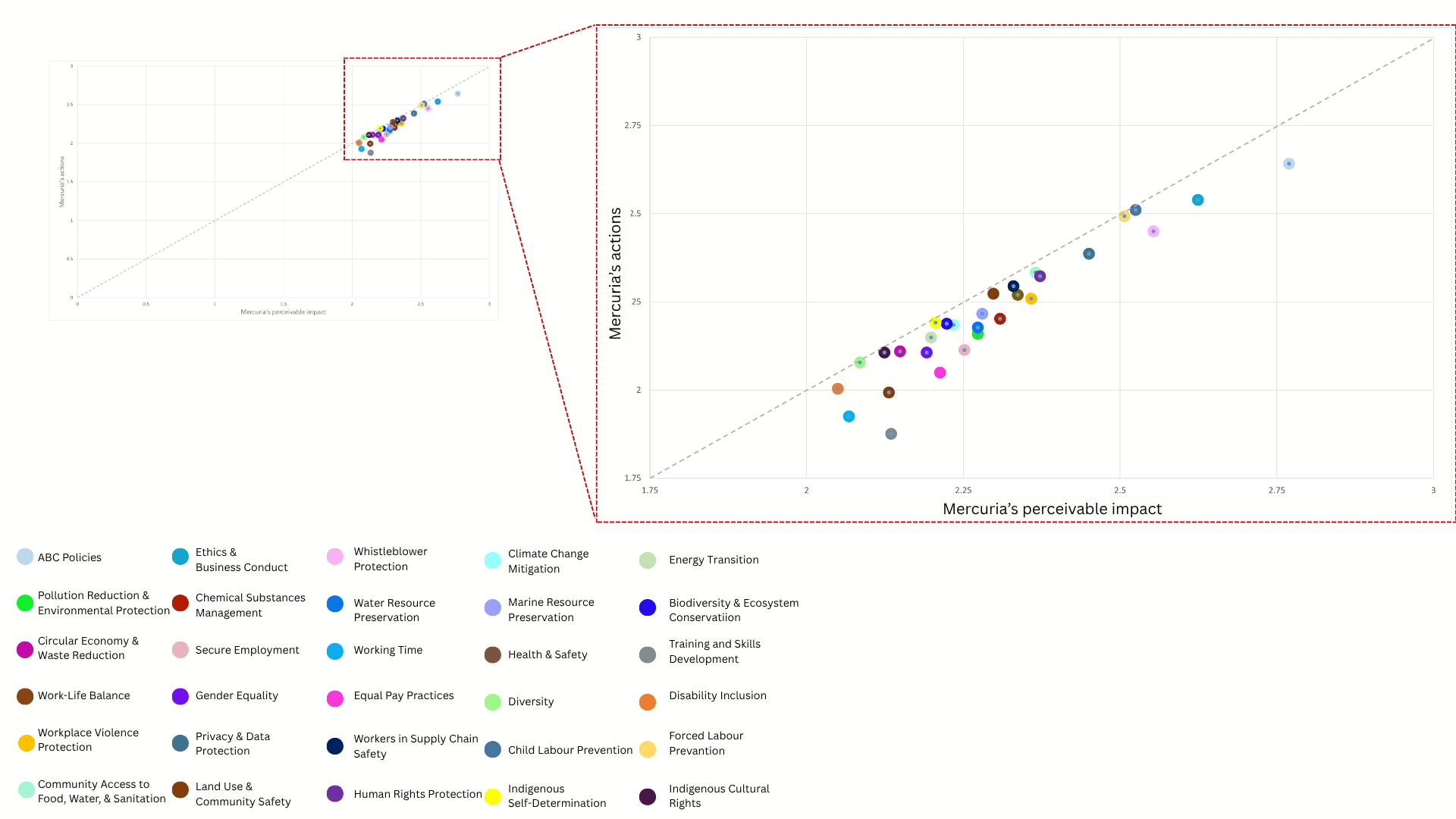
In addition, this year we continued to adopt a multi-stakeholder approach. Our analysis comprised three parts: (1) an assessment of potential impacts, risks, and opportunities across our operations; (2) a review of internal stakeholders’ perspectives on the relevance of these topics to Mercuria and on Mercuria’s actions in relation to them; and (3) an evaluation of external stakeholders’ perceptions of Mercuria’s material topics, informed by the due diligence requests we receive from counterparties, banks, and partners, in order to better understand external expectations regarding ESG issues relevant to Mercuria.
We continue to assess and update our climate-related risks and opportunities in line with the TCFD framework as we expand into new trading and operational streams, and we publish the results to provide transparency on potentially financially material risks and opportunities. Internal stakeholder perspectives on materiality were gathered through our annual anonymous employee survey, ensuring that employee views remain embedded in the process while preserving the integrity of responses. This broader approach, combined with insights into the expectations of external partners, allowed us to develop a more comprehensive understanding of the material topics to Mercuria across multiple stakeholder groups.
This enhanced approach strengthens our understanding of the topics most material to our business, supports the alignment of our strategy with those priorities, and helps prepare us for future regulatory developments.
The first figure presents the results of the employee survey. Employees assessed how well Mercuria is addressing various material topics (y-axis) relative to how important these topics are to the company (x-axis). Each topic was assessed on a scale from 0 (irrelevant) to 3 (critical). In terms of Mercuria’s perceived impact, all topics received scores above 2, indicating that employees regard them as material to the business. Most data points are positioned close to the diagonal line, suggesting that Mercuria’s performance broadly aligns with employees’ expectations. The fact that they sit slightly below the diagonal further suggests that employees hold the company to high standards, pointing to areas for continued improvement.
The second figure presents the results of the requests received from external stakeholders, including counterparties, banks and other partners in 2025. It provides insight into the material topics most frequently raised by external stakeholders.
In 2025, governance, integrity and risk-related topics were the most prominent. Corporate culture, responsible business conduct and transparency emerged as the most frequently raised topic, followed by counterparty risk and geopolitical risk, including sanctions compliance. Corruption and bribery, legal proceedings and compliance enforcement risks, financial risk management, proactive risk management, and political engagement and lobbying activities also ranked highly. Together, these results highlight continued external focus on strong governance, effective compliance controls and robust risk oversight in an increasingly complex operating environment.
Human rights and labour-related issues also remained an important area of focus, both within our own workforce and across the supply chain. In particular, health and safety, forced labour, child labour, whistle-blower protection, and broader labour rights policies were repeatedly identified as material topics. Supplier relationship management, including payment practices, also featured prominently, reflecting growing expectations around responsible business conduct throughout the value chain.
Environmental and community-related topics were also reflected in KYC requests, including emissions reduction, payments to governments, resource use, substances of concern, biodiversity and ecosystems, pollution, security-related impacts, and the rights of indigenous peoples.
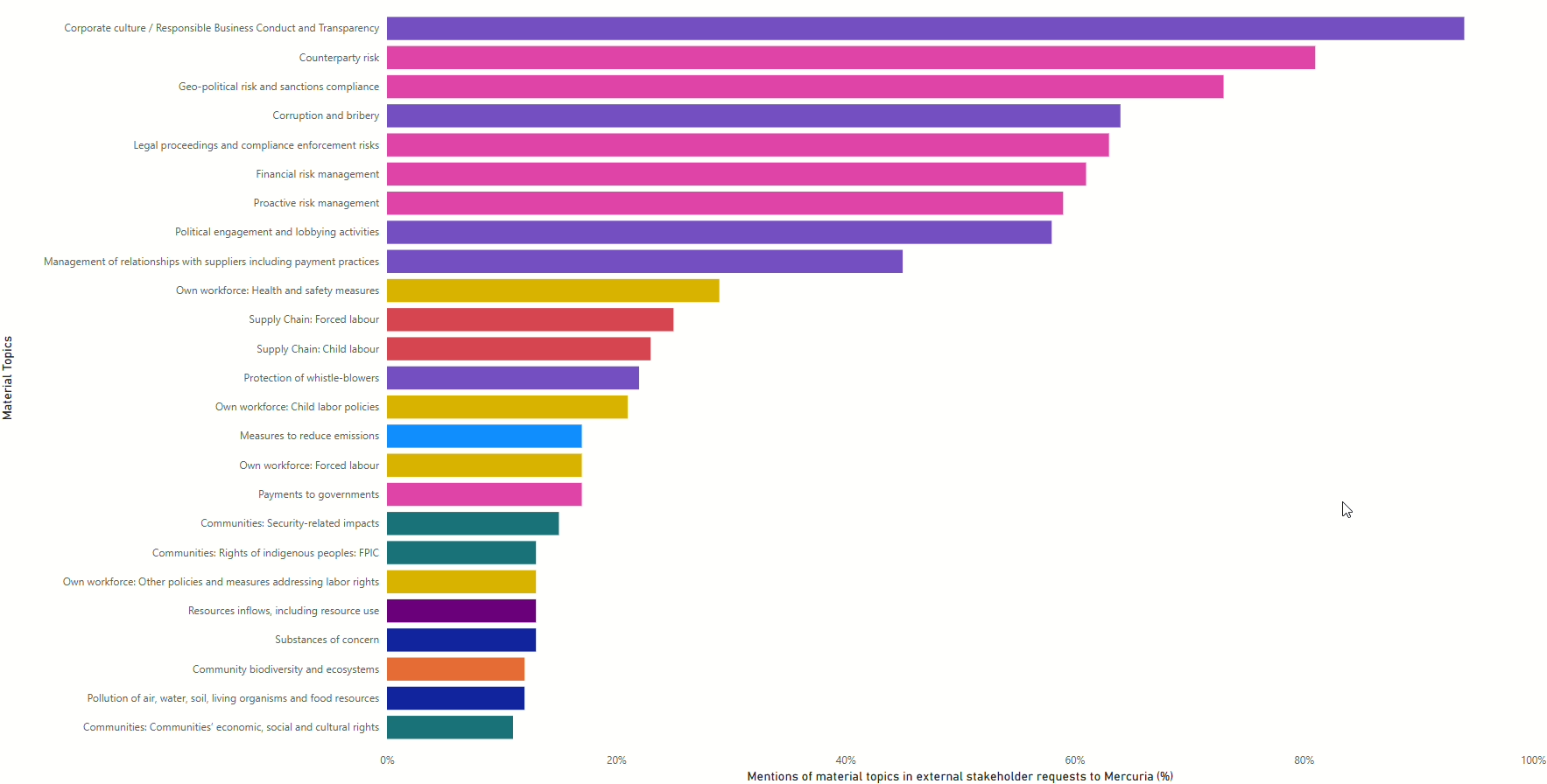
Overall, the results show a broad alignment between internal and external perspectives on Mercuria’s material topics, while also highlighting differences in emphasis. Employees tend to take a more balanced view across the full range of ESG topics and consider Mercuria’s actions to be broadly aligned with their expectations, whereas external stakeholders place stronger emphasis on governance, compliance, risk management and responsible business conduct. This suggests that Mercuria’s internal understanding of materiality is well aligned with external expectations, while also extending beyond immediate due diligence priorities. Together, these perspectives provide a more comprehensive view of the issues most relevant to the business and support Mercuria’s ongoing efforts to strengthen its approach across material topics. They also help inform the continued development of strategy, disclosures and actions in response to evolving stakeholder expectations and future regulatory developments.
Payments to governments
As part of its Anti-Bribery and Anti-Corruption Policy, Mercuria prohibits the payment of facilitation fees. Mercuria takes care to ensure that any fees being paid to a government agency in relation to deals are legitimate payments and not facilitation payments.
Below you can find information on the payments that Mercuria has made to governments in relation to our extraction facilities.
The consolidated overview presented above discloses the sum of the Group’s payments to governments in each country where the Group had extractive operations. The overview is based on the location of the receiving government.
About Payments to Governments in 2025
This report has been prepared in line with the Swiss Code of Obligations and the EU Accounting Directive 2013/34/EU, as amended which has been transposed into Cyprus legislation. The report’s publication aims to provide for enhanced transparency of payments made to governments in the context of extractive and harvesting activities.
Article 964d of the Swiss Code of Obligations states that “Companies that are required by law to undergo an ordinary audit and which are either themselves or through a company that they control involved in the extraction of minerals, oil or natural gas or in the harvesting of timber in primary forests must produce a report each year on the payments they have made to state bodies.”
Article 42 of Directive 2013/34/EU states that “Member States shall require large undertakings and all public interest entities active in the extractive industry or the logging of primary forests to prepare and make public a report on payments made to governments on an annual basis.” The provisions of this EU Directive are integrated in 13th Schedule of the Companies Law, Cap 113 in Cyprus.
Basis of Preparation and Scope
Mercuria Energy Group Ltd as parent of the Mercuria group of companies (the “Group”) has prepared the report on a consolidated basis and reports the activity of any of its subsidiary undertakings that perform extractive operations. Taxes, royalties, license fees, production entitlements and infrastructure improvements to governments are presented as incurred during the reporting period.
This report includes all payments to governments for activities which relate to exploration, discovery, development and extraction of minerals and other materials resulting from extractive operations of each of the Group’s consolidated subsidiaries during the financial year of 2025 (from 1 October 2024 to 30 September 2025).
Payments made to a government as a single payment or as a series of related payments of EUR 100,000 or more in financial year 2025 form part of this report.
This report excludes payments by non-consolidated entities (such as those that are accounted for using the equity method) regardless of the amounts paid and also excludes payments to governments related to the processing, marketing and trading of any of the Group’s products. Equally, any donations made, for example in respect of social or community programs, are excluded.
Unless otherwise noted, the following terms have the meanings as explained below:
Government
Any national, regional or local authority of a country, and includes a department, agency or other undertakings controlled by that authority.
Materiality Payments
Payments made as a single payment exceeding EUR 100,000 or as part of series of related payments within a financial year exceeding EUR 100,000.
Reporting Currency
All payments have been reported in USD.
Amounts in currencies other than USD (presentation currency for this report) have been converted based on the average annual foreign exchange rates prevailing as of September 30, 2025.
Payment Types
“Payment” is defined as an amount paid whether in cash or in kind, for relevant activities where the payment is of any one of the types listed below:
Production Entitlements/Rights
Represents host government’s share of production. This payment is generally made in kind.
Taxes
Represents taxes levied on the income, production or revenues or profits of a consolidated subsidiary, excluding taxes levied on consumption such as value added taxes, personal income taxes or sales taxes. Where practical, we have reported the amounts associated with the extractive operations only. Tax payments are made in accordance with current local regulations, which may include instalments.
Royalties
Represents percentage of production payable to the owner of the mineral rights.
Fees
Represents license fees, surface or rental fees, and other consideration for licenses and / or concessions paid for access to the area where extractive operations are conducted.
Infrastructure Improvements
Represents payments for local development, including the improvement of infrastructure, not directly necessary for the conduct of extractive operations but mandatory pursuant to the terms of a production sharing contract or to the terms of a law.
Continue reading