

Progress in 2025
PROSPERITY in 2025
Introduction
In this section, we highlight Mercuria’s 2025 activities to attract talent, strengthen our employer brand and build the skills and capabilities that support our business and broader prosperity. We also outline how innovation and research are driven through our investments, particularly in companies developing the technology and infrastructure needed to support evolving energy and commodity systems.
Underpinning all of these activities is a shared ambition — to ensure that Mercuria’s growth creates lasting value for people, communities and the planet in equal measure.
We are proud that this ambition has been recognised beyond our own reporting. In 2025, Mercuria was shortlisted as a finalist in two categories at the Reuters Global Sustainability Awards — the Product Innovation Award for Bio Bunkering, Minerva Bunkering’s groundbreaking sustainable marine fuel, and the Biodiversity Champion Award for our United for 30×30 initiative advancing ocean protection. Reaching the final shortlist in both categories, while an achievement in itself, is above all a reminder of the standard we hold ourselves to.
What follows details the people, innovations and community initiatives that gave substance to that ambition over the course of the year.
Collaboration with universities
For over 10 years, we have been a supporter of the École Polytechnique Fédérale de Lausanne (EPFL) Forum, Europe’s largest recruitment fair that sees more than 200 companies and 100 start-ups gather to meet students and graduates from EPFL. Each year we recruit several students onto our internship program. In 2025, we again recruited several interns as part of their masters program and we were able to offer a permanent role within Mercuria to every intern on completion of their degree.
In North America, we participate in recruitment fairs at campuses across Texas, including at Harmony Public Schools, a system of 60 Texas public charter schools that provides rigorous, high-quality education focused on Science, Technology, Engineering, and Math. Through a caring and collaborative environment, Harmony provides students from traditionally underserved communities the opportunity to excel through project-based learning where they learn the skills necessary to become a contributing global citizen.
In 2025, we also continued our annual veteran recruitment at the Recruit Military job fair in Houston, Texas. We participate in other university recruiting events to hire top talent.
University of Geneva – Geneva Center for Business & Human Rights
Mercuria has partnered with the University of Geneva (UNIGE)’s Geneva Center for Business and Human Rights (GCBHR). Through this collaboration, nine selected students, under the supervision of members of the GCBHR and Mercuria, worked on a real-life business and human rights case study with Mercuria focused on the mining sector. Several workshops were held at both Mercuria and UNIGE. The students also interviewed relevant Mercuria employees and external experts, drew on research, and developed a risk matrix and training module for internal use by Mercuria employees. The training module is intended to immerse participants in real-life scenarios involving complex human rights-related decisions, illustrating how different choices can shape the way risks develop and are managed.
Technology & innovation
Mercuria supports revolution and digitalization of the markets in which we trade and we are committed to using technology and innovation to advance our business and to help the energy transition.
We have dedicated teams of technologists who are working to develop new applications and solutions that can help us to achieve our goals. One of our key areas of focus is on the use of remote sensing data. Remote sensing data can be used to track a variety of factors, including weather patterns, deforestation and biodiversity. We are using this data to develop new applications that can help us to reduce risk, increase transparency, and improve our decision-making. For example, we are using remote sensing data to track deforestation in the Amazon rainforest. This data is being used to identify areas that are at risk of deforestation, to help develop strategies to prevent it and mitigate the effects of climate change. This technology is deeply integrated into our operations in Silvania.
We believe that transparency and standardization are essential for fair and safe markets. We support these objectives by working with a number of industry consortiums and tech companies on the development of new technologies.
Citizen Sea
We continue our strong partnership with HUB Ocean. Our collaborative efforts span various projects. In sync with our mission to empower our seafarers and others to share their oceanic experiences, in 2023 Minerva Bunkering, our bunkering business, has sponsored a HUB Ocean application, Citizen Sea.

Available on the Apple Store and Google Play, Citizen Sea allows any seafarer or ocean visitor to capture photos, tag their location and category, and upload them directly on the application. Users can upload any photo from ocean pollution to natural sightings. These valuable photos along with their metadata make their way to researchers and scientists through HUB Ocean. HUB Ocean then connects these photos to scientists and researchers that can use them in various studies, broadening the scope of oceanic research. We continue to assess various use cases for inclusion in future iterations of the app.
Advanced Delivery Platform (ADP)

Validere
We have progressed in our emissions reporting by partnering with Validere, a third-party emissions management software provider, backed by a team of qualified sustainability and technology experts. This collaboration was aimed at digitizing and validating our emission calculations and streamlining our GHG reporting across multiple assets. We have migrated all emissions reporting for Mercuria and its assets to Validere’s platform and continue to look for ways to improve our reporting process.

Mercuria Hackathons
We created the concept of the Mercuria Hackathons by combining our strategies for both technology and innovation with hiring and internships. The hackathons are a series of weekend events around the world where interdisciplinary teams come together to create innovative software development solutions that solve big energy transition challenges.
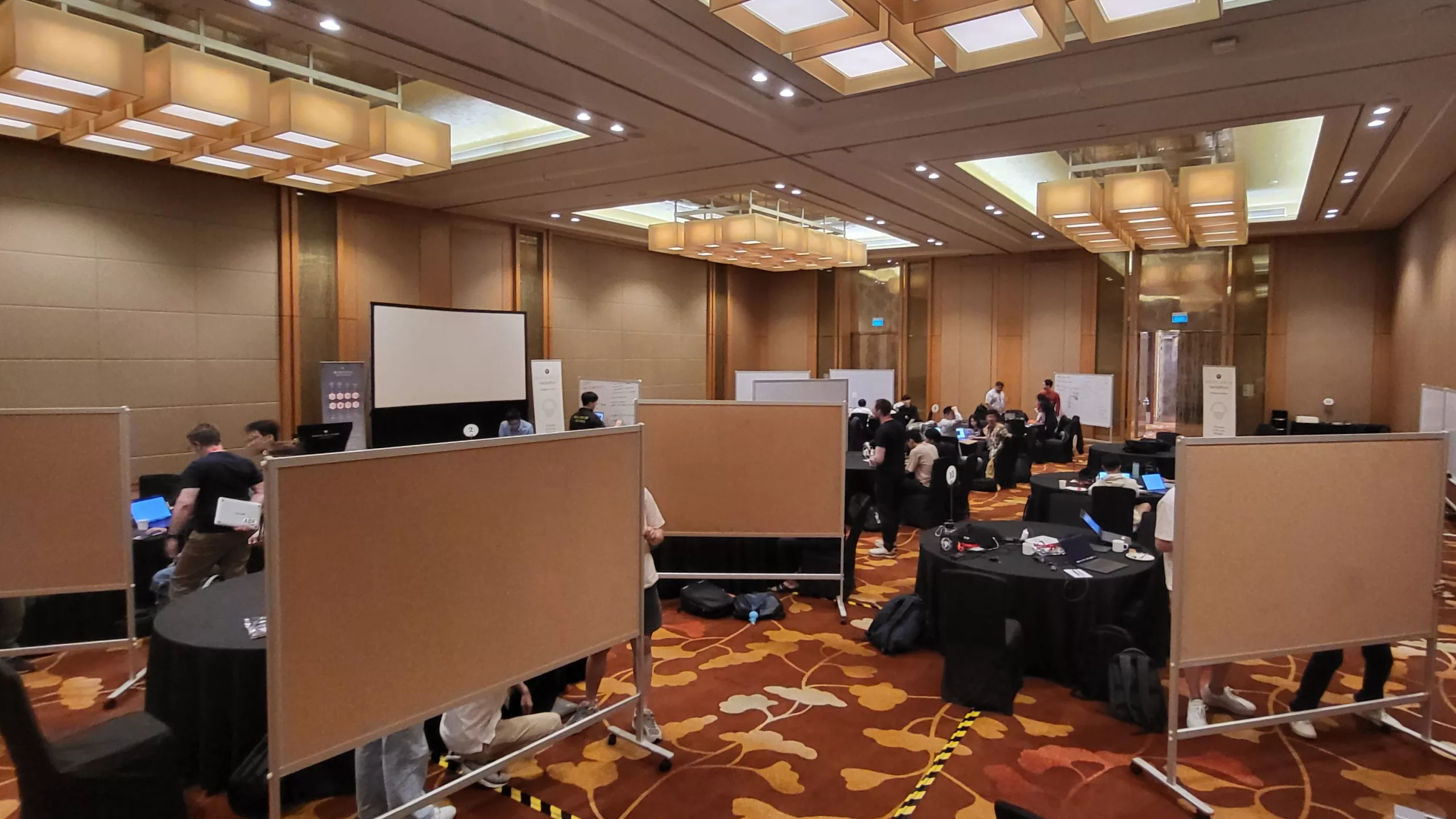
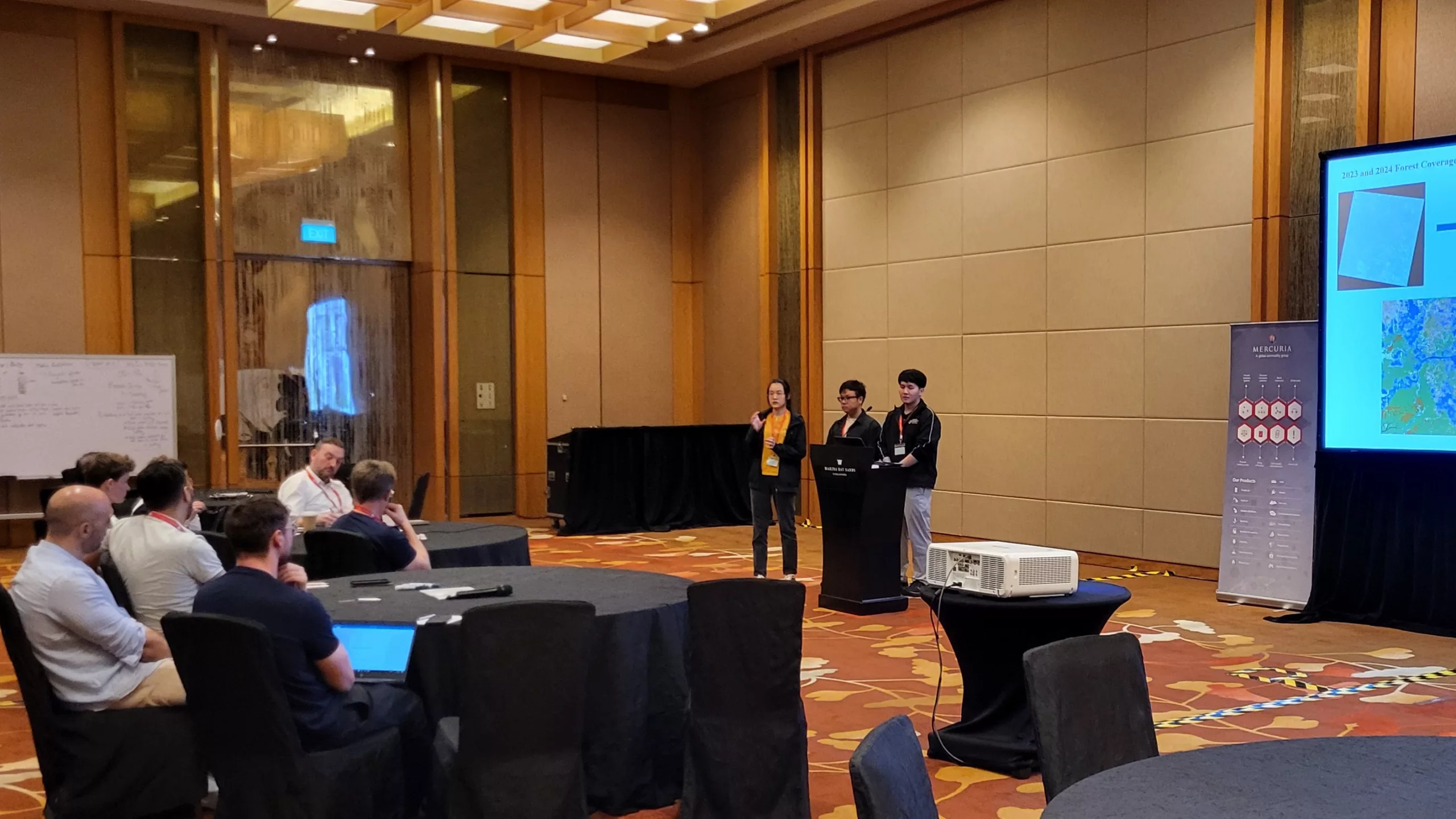
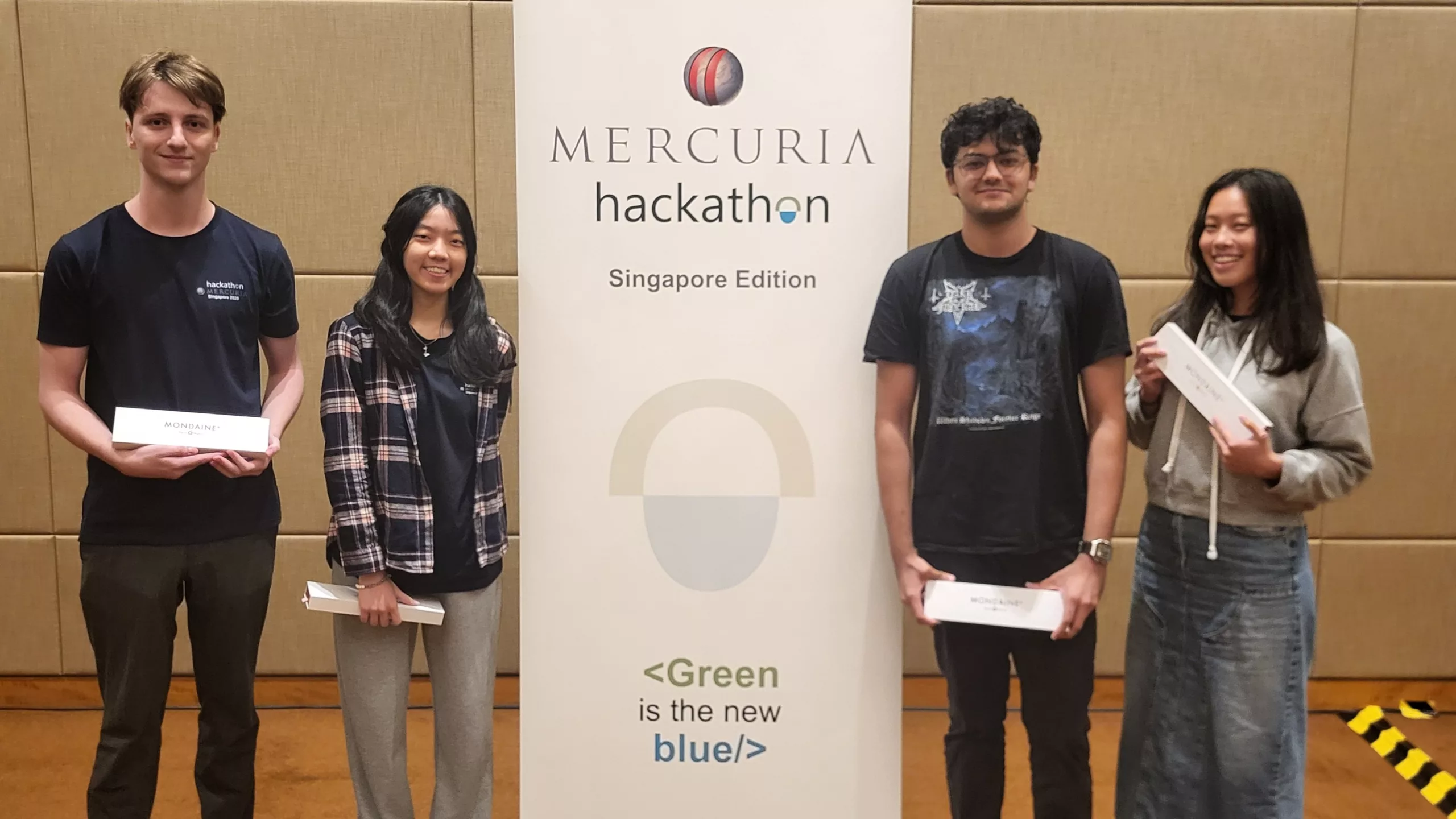
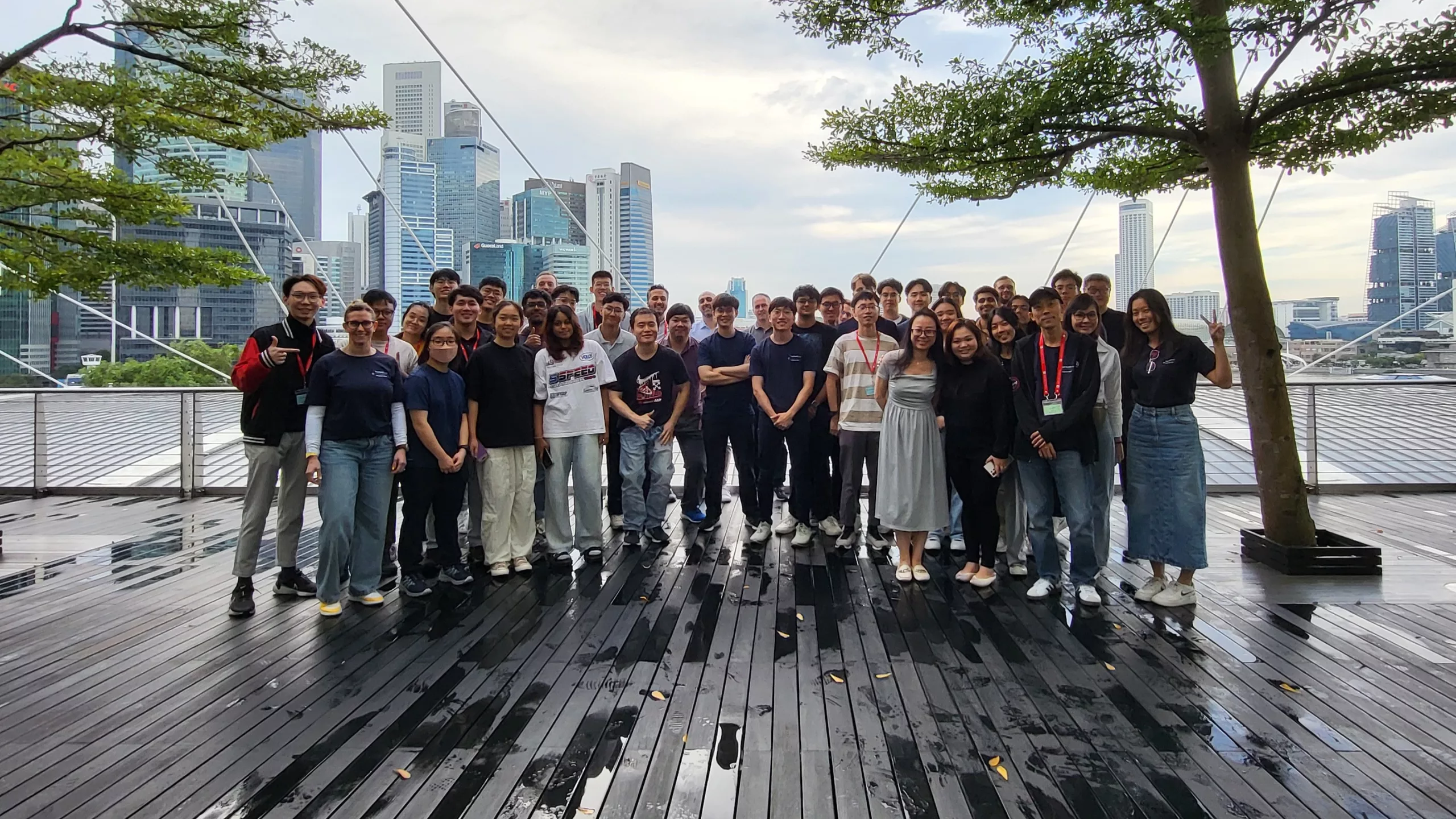
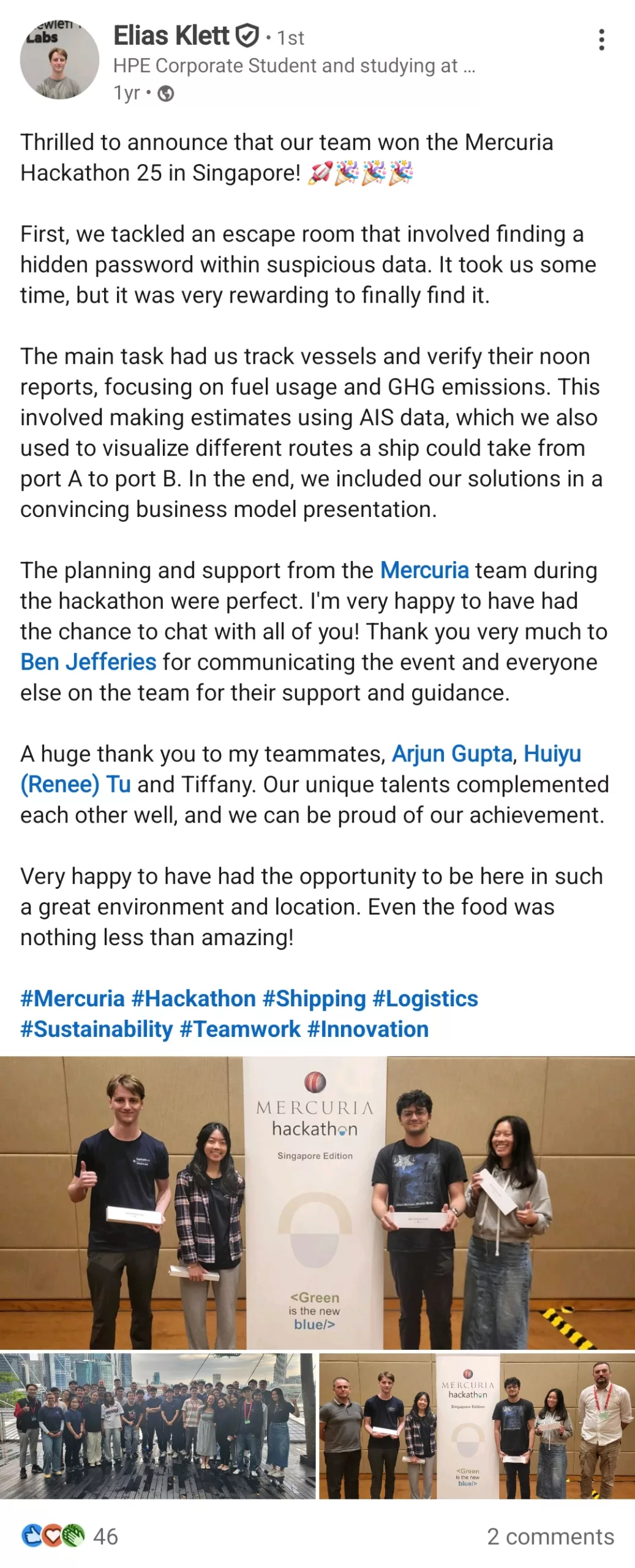
Our 4th Mercuria Hackathon was held in Singapore in March 2025, a 36 hour event that built on the experiences we had gained from running our first 3 Hackathons. Students from universities and colleges across Singapore were invited to take part and we had nearly 100 applications from which we selected 44 to take part. Participants represented 16 different educational institutions, including an exchange student from Europe! To encourage cross‑discipline and cross‑institution collaboration, participants were allocated to 11 teams to address the challenges presented to them. Each team brought together students from diverse academic backgrounds and levels of technical experience, creating an environment that mirrored real‑world working conditions. They were given the freedom to experiment with emerging technologies and develop practical, innovative solutions, first tackling a themed challenge before moving on to broader, open‑ended problem statements.
The Challenges
The hackathon began with a virtual escape room, designed to test participants’ ability to apply technical and analytical thinking under pressure. The scenario simulated a real-world cybersecurity incident that teams needed to resolve within a four-hour time limit. Successfully completing this challenge unlocked the details for the second stage, where teams could choose from one of two thematic problem statements, both of which had a geospatial element.
Option 1 – Protecting Indonesia’s Forests
Calculating Greenhouse Gas Emissions Due to Deforestation and Predicting Future Trends
This challenge tasked participants with creating a system to identify areas vulnerable to deforestation across Indonesia and to calculate and project the resulting greenhouse gas (GHG) emissions. Using advanced technologies such as remote sensing, GIS, and AI, teams analysed satellite and biomass data to detect forest loss, highlight key causes, and build models predicting future deforestation and its environmental consequences.
Indonesia’s tropical forests are the third largest in the world and vital carbon sinks supporting exceptional biodiversity. They are, however, under severe threat from agricultural expansion, palm oil cultivation, and mining. By combining spatial and predictive analysis, teams demonstrated how technology can help pinpoint at‑risk regions and support carbon‑offset and preservation initiatives. The challenge reinforced the importance of scalable, data‑driven systems to support forest protection, biodiversity conservation, and climate‑change mitigation.
Option 2 – Shipping Efficiency
Monitoring and Reducing Greenhouse Gas Emissions Through Smarter Maritime Operations
The second challenge focused on how digital innovation can reduce carbon emissions across global maritime operations. Participants designed intelligent systems to monitor and verify shipping journeys, optimise route planning, and improve overall logistics efficiency. Drawing on big‑data analysis, Python programming, and geospatial tools, teams created prototypes that could track fuel use and GHG emissions, compare automated and manual voyage reports, and propose “Just‑In‑Time” arrival strategies to minimise idle port waiting times.
Given Mercuria’s work in freight and bunkering, the challenge reflected real‑world opportunities to lower emissions within its own operations and across the maritime industry. By aligning better voyage planning with cargo logistics optimisation, the teams’ solutions demonstrated how technology can deliver both environmental and economic benefits—cutting fuel use, increasing fleet utilisation, and reducing emissions per tonne of cargo transported.
Judging and conclusion
Whilst the Singapore hackathon was competitive, it was also designed to replicate a real‑world working environment—demanding yet collaborative, with an element of fun. Participants were encouraged to think creatively under pressure, work effectively with team members they had never met before, and solve open‑ended problems using limited information. Unlike many similar events, teams were deliberately formed across different universities and disciplines to observe how participants adapted and collaborated in an unfamiliar, dynamic setting.
Projects were assessed on innovation, scalability, usability, and engineering excellence, with additional points awarded for collaboration, teamwork, and presentation quality. Scores from both challenges contributed to each team’s overall result, recognising not only technical achievement but also the ability to communicate ideas effectively.
As with previous hackathons held in Switzerland, the USA, and India, feedback from participants was extremely positive. The event further strengthened Mercuria’s reputation as an innovative, forward‑looking organisation where graduates and experienced professionals alike can apply technology and creativity to tackle global sustainability challenges.
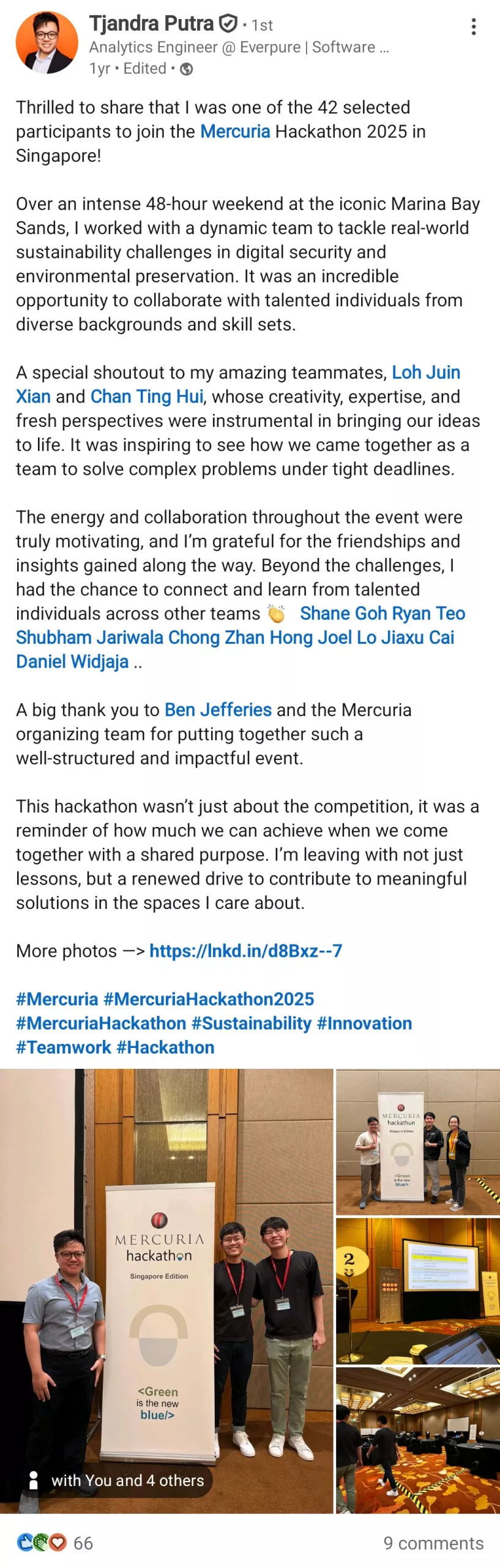
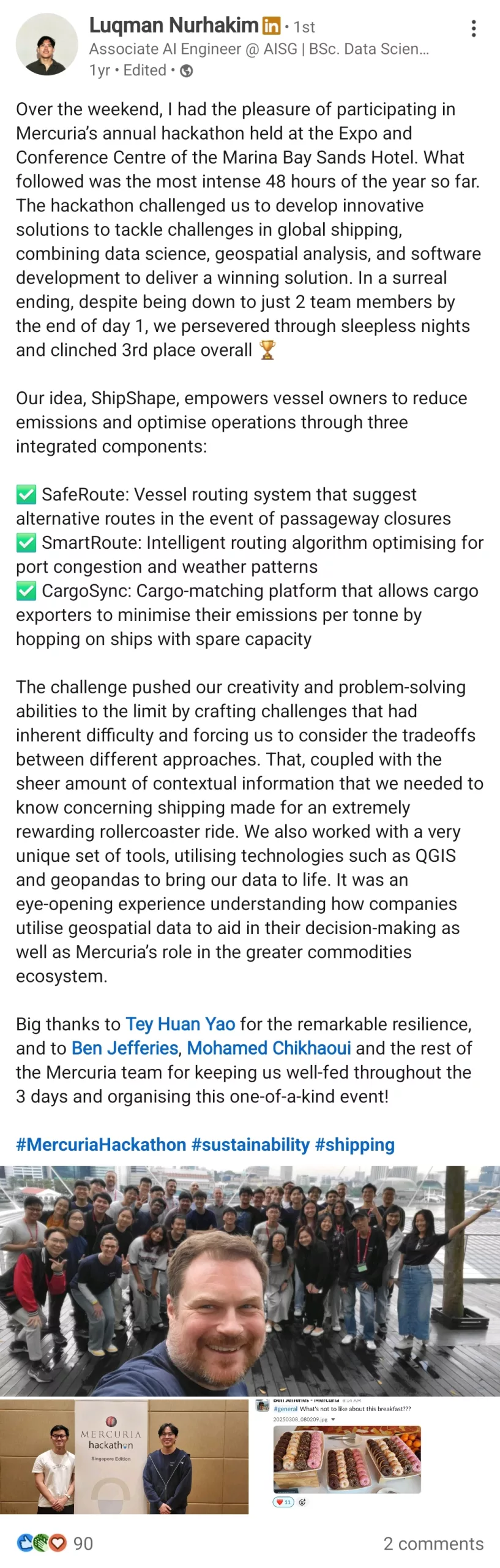
Feedback on LinkedIn from Mercuria Hackathon participants
SDG 3 – Good Health and Well-Being
- We continue to promote healthy lifestyles within the workplace through seminars, fitness classes, and other activities.
- We continue to provide safe work environments that are free from discrimination and promote mental health.
- We continue to provide health, safety, security, and environmental training to our employees and contractors to ensure safe operations at Mercuria and our assets.
- We continue to support community projects such as Barefoot College International that promote health and well-being in some of the communities connected to our supply chains.

SDG 7 – AFFORDABLE & CLEAN ENERGY
- We continue to invest and promote cleaner energy products. We have achieved our milestone of having over 50% of our capital investments into the lower carbon sector by 2025 ahead of schedule.
- We continue to invest in portfolio companies such as Pretoria Energy, which produces green, biogenic gas and bio-LNG using 100% renewable processes, and Parliament Energy, a leading developer and operator in the renewable energy sector, which went operational in 2025.
- We continue to collaborate with Barefoot College International to train women in local communities as solar engineers, enabling them to bring solar energy to their communities.

SDG 8 – DECENT WORK & ECONOMIC GROWTH
- We continue to promote a diverse workforce at Mercuria, reflecting a broad spectrum of ages ranging from 21 to 78 years old.
- We ensure responsible sourcing free from slavery, human trafficking, and child labour forms. These form the foundation of our supply chain due diligence checks. Mercuria continues to refresh its policies to align with the latest standards, evolving regulatory requirements and recognised best practices, reinforcing our commitment to strong governance and responsible business conduct.
- We provide various educational opportunities, ranging from Lunch and Learn sessions to comprehensive training programmes. We continue to add new trainings to our training platform, offering customized training modules developed in-house, aimed at ensuring that our employees meet the highest business standards.

SDG 9 – industry, innovation & infrastructure
- As part of our expansion into the metals sector, we announced a joint venture partnership with Gécamines, the Democratic Republic of Congo’s state-owned mining enterprise. The partnership is aimed at securing fair practices based on international pricing benchmarks while ensuring its resources are marketed transparently and strategically.
-
Carbon capture solutions are integrated into some of our asset companies, removing carbon from the atmosphere and enabling new, low‑carbon business models.
- By incorporating advanced technologies like remote sensing and satellite imagery in Silvania, we enhance project development, monitor progress, and ensure the traceability and accountability of carbon credits.

SDG 12 – responsible consumption & production
- Our Pretoria Energy investment operates one of Europe’s largest networks of anaerobic digestion facilities, converting agricultural residues and sustainable energy crops from their own Cambridgeshire farms into renewable energy.
- Our Exergyn investment pioneers refrigerant-free heat pump technology for clean energy using shape memory alloys.
- We recycle water in some of our mines for product washing, reducing our reliance on fresh water and decreasing environmental impact by minimizing wastewater.
- We continue to establish and enforce rigorous policies and systems for managing chemicals and waste across all our operations and those of our invested assets through regular site visits and testing.
- We operate a responsible metals desk and conduct robust ESG due diligence to promote responsible sourcing throughout the supply chain.
- We are committed to reporting Scope 1, Scope 2 and selected Scope 3 emissions beyond our direct emissions to include assets in which we hold a 20% or greater equity stake and offset all our Scope 1 and Scope 2 emissions.

SDG 15 – life on land
- Our Silvania business continues to grow, now operating projects across more than 20 countries and protecting over 29 million hectares of critical ecosystems. Using cutting-edge technologies such as satellite imagery and bio-acoustics, we enhanced the effectiveness and transparency of our conservation initiatives while supporting biodiversity restoration efforts globally. Silvania has also been deploying upfront capital to empower local communities, indigenous peoples, and landowners, ensuring long-term environmental and social benefits. Through these efforts, we are driving sustainable development while combating climate change and biodiversity loss on a global scale.
- The Race to Belém is a collaborative initiative led by Conservation International, The Nature Conservancy, and Silvania aimed at protecting the Brazilian rainforest — one of the world’s most critical ecosystems. Each partner brings unique expertise and a shared commitment to scaling conservation efforts.
- We are continuing our partnership with Uplink and 1t.org to identify and support high-impact innovators aimed at advancing solutions to the biodiversity and climate crises.

SDG 16 – peace, justice and strong institutions
- We continue to refresh our policies to align to the evolving global standards and to set best practices in human rights, ensuring that our business rights continue to align with these principles.
- We have revised our Business Principles to place a stronger emphasis on sustainability and human rights, aligning it with the standards we expect all our employees to uphold.
- We have partnered with the Institute for Human Rights and Business (IHRB), actively following their work and participating in their events, particularly on issues related to a just energy transition and the human rights risks affecting communities and seafarers.
- We have announced a partnership with Entreprise Générale du Cobalt (EGC) to support the formalisation and development of an artisanal mining site and its associated cobalt supply chain in the DRC, with the ambition of developing a “gold standard” responsible cobalt ASM supply chain. The partnership aims to improve working conditions, strengthen responsible sourcing practices and support access to fair prices.
- We have partnered with the University of Geneva (UNIGE)’s Geneva Center for Business and Human Rights on their Clinic in where nine students participated in an actual case study linked to the formalization of artisanal mining in the Democratic Republic of the Congo.
SDG 17 – partnerships for the goals
-
We contribute to SDG 17 by continuing to facilitate market access to more sustainable products and services, thereby supporting economic growth, job creation, and poverty reduction, while advancing the Goal’s broader objectives on trade and investment.
-
We promote knowledge-sharing and technology transfer through collaboration with academic institutions, research organisations, and industry peers, as highlighted under the other SDGs above. These partnerships, including ongoing support for new ideas through the Villars Institute, help disseminate best practices and foster innovative solutions for sustainable development.
- Mercuria partners with a range of actors across the supply chain, including those whose work supports responsible supply chains, such as the initiatives reflected under SDG 16.
- Mercuria also continues to organise its annual Hackathon. In 2025, the event was held in Singapore and brought together students from universities and colleges across the country. Nearly 100 applicants applied, of whom 44 were selected to participate. Further details are provided in the section above.
Update on Agenda 2030